Children read your walls long before they read anything else.
A corridor is the first thing a child sees each morning and the last thing they pass on the way out. In most schools it is also the only surface nobody has thought about.
Qualified art teacher · Registered with the Teaching Council of Ireland · Garda vetted
Registration number and vetting disclosure supplied on request, before the first site visit.
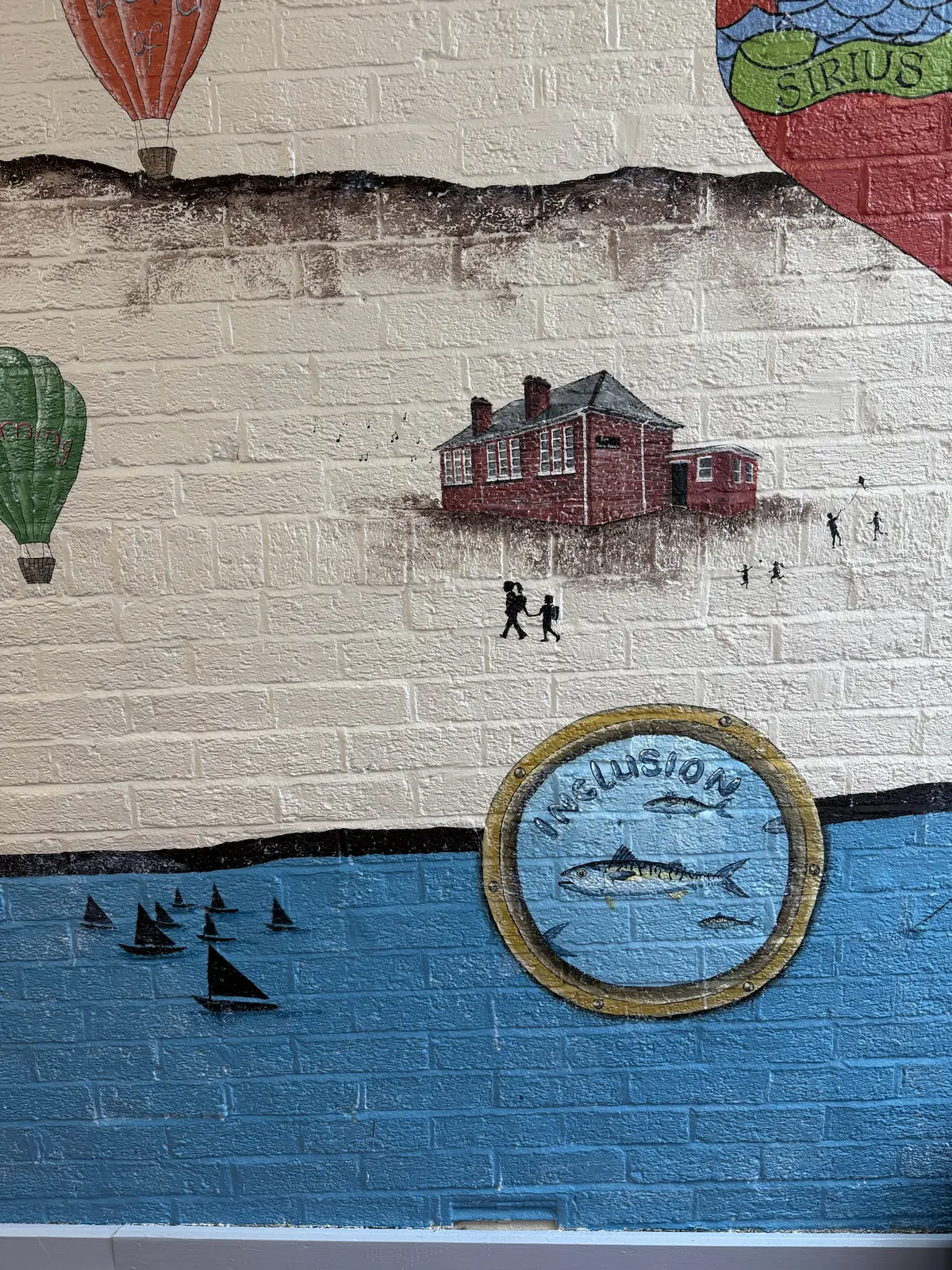
A painted wall is not decoration. It is part of the building's job.
Schools spend years shaping what children learn and how they treat each other, then leave that work entirely to laminated posters. A mural does something a poster cannot: it stays, it belongs to the building, and it is at the child's eye level every single day. I am an art teacher as well as an artist, so I am designing for a corridor I have actually stood in at half past eight in the morning.
The building teaches too
The physical classroom measurably affects how well children learn — and colour is one of the factors that carries the most weight. A wall is not neutral. It is either working for you or it is doing nothing.
Values that children can point at
Most schools have a set of values on a page in a policy folder. Painted into a corridor — a porthole for Inclusion, a gull for Happiness — they become something a six-year-old can actually explain to a visitor.
Somewhere that feels like theirs
Children who feel ownership of their space behave differently in it. A mural that carries the school's own history, crest or coastline says this place is ours in a way a bought print never will.
Painted by someone who has taught
I am a qualified art teacher as well as a muralist. That means I understand a school timetable, a fire door, a wet break and a class of thirty walking past wet paint — and it means the design conversation is one you have with a colleague, not a contractor.
Researchers at the University of Salford studied 3,766 pupils across 153 classrooms in 27 schools. They found the physical design of a classroom — light, air, layout and colour — could account for up to a 16% difference in a pupil's learning progress in a single year.
The same study found the opposite is also true: rooms that are over-stimulating scored badly. More stuff on the walls is not the answer. A considered mural is — which is exactly why the design gets agreed with you before anything is painted.
Barrett et al., University of Salford — the HEAD Project, 2015Walls I have already painted like yours
Every one of these started as a blank or tired wall and a conversation.
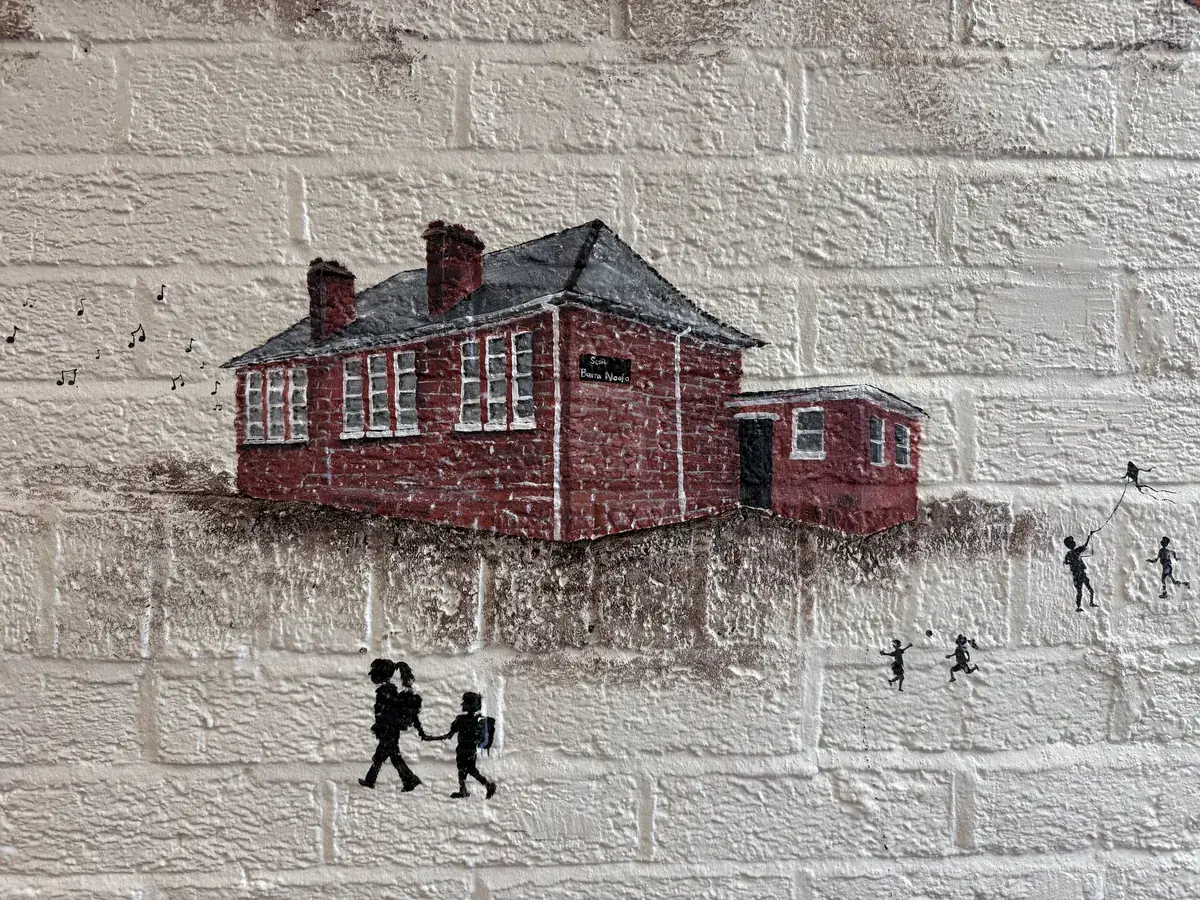
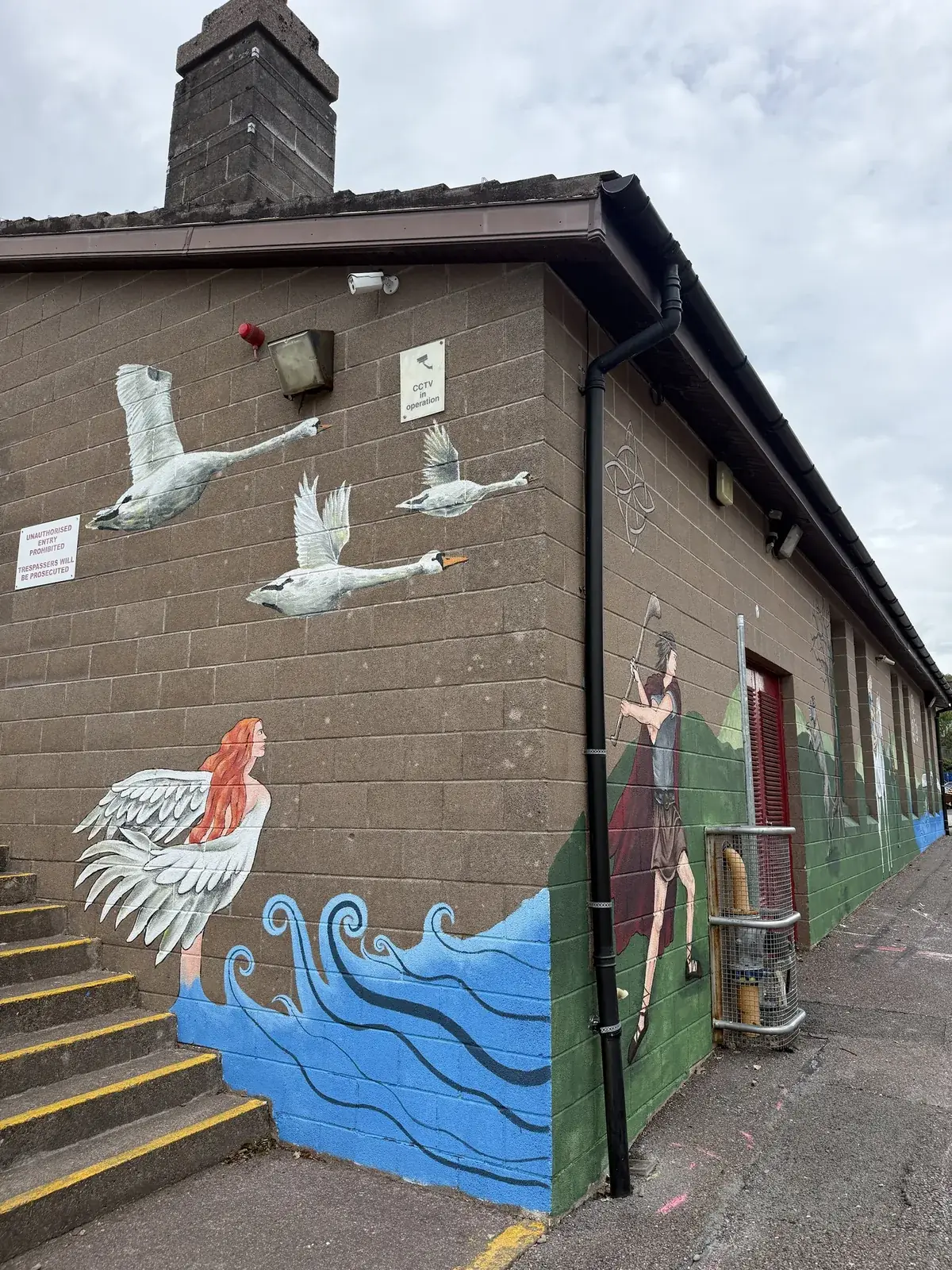
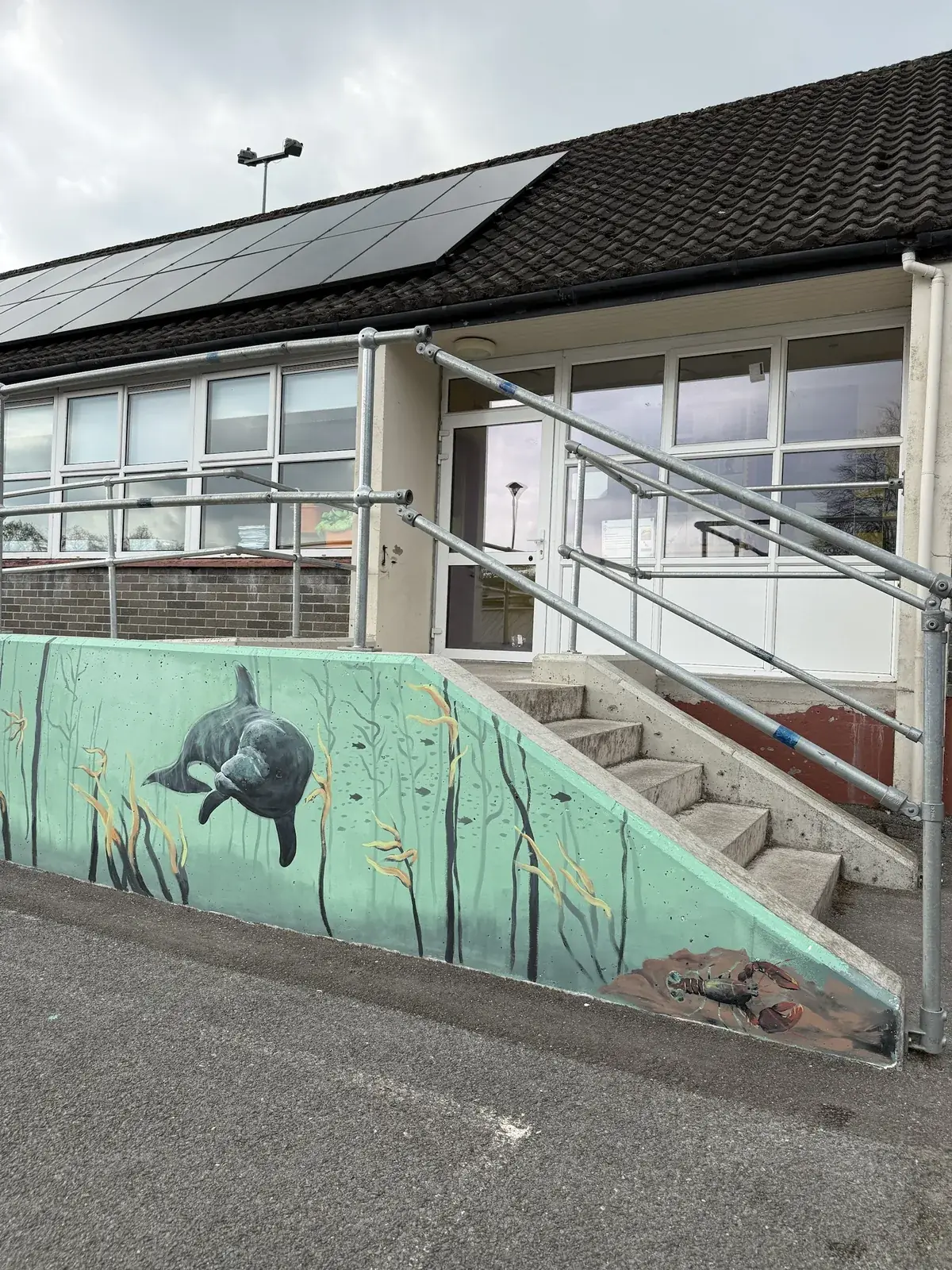
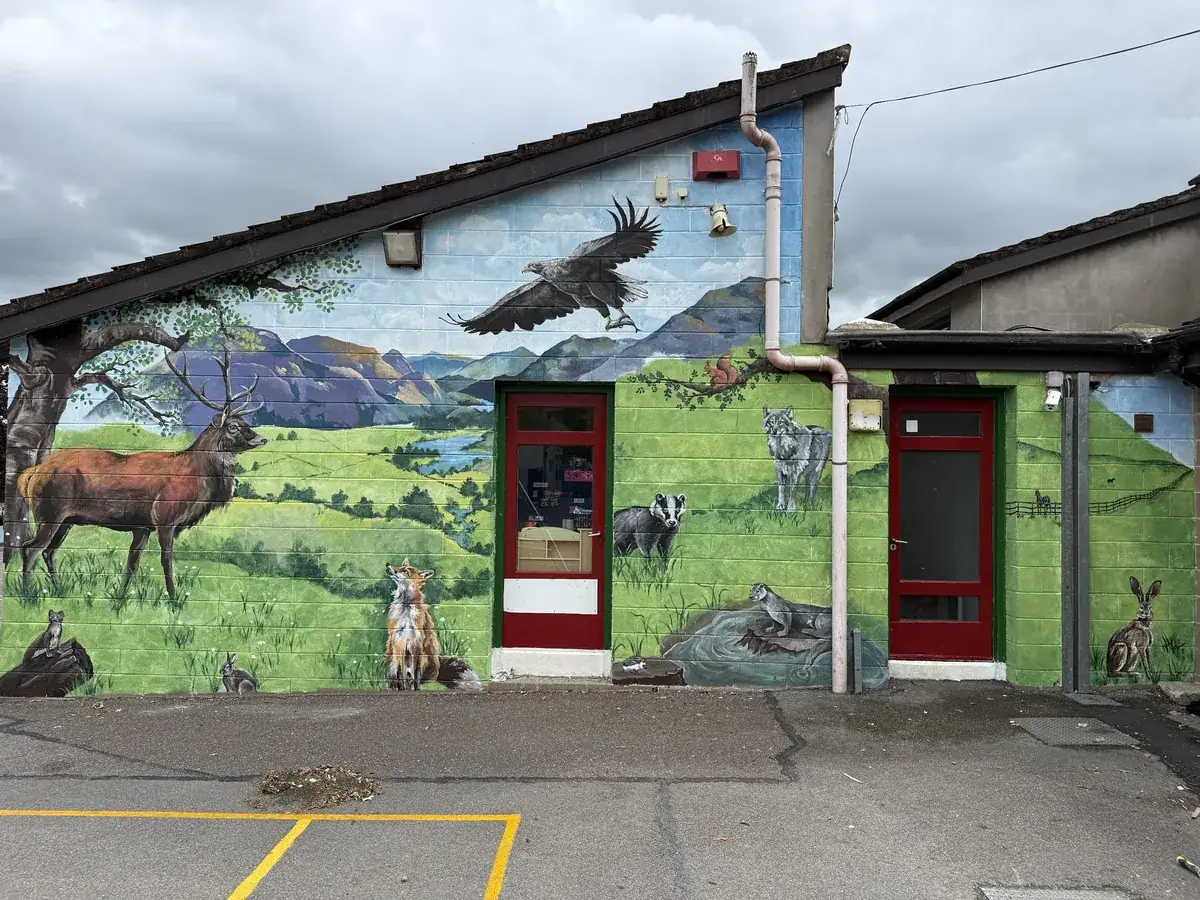
“I had a vision for the mural to encapsulate our key school values and to incorporate different elements of our community and parish. Caitlin listened to my ideas and she did her own research on the history of the area.”
How it works, start to finish
The same five steps every time, so you always know what happens next.
Consultation & site visit
We walk the space together and talk through mood, colour, budget and how the wall actually gets used.
Design proof
A to-scale mockup of the mural on a photograph of your own wall. Nothing is painted until you have said yes to it.
Wall prep
Cleaning, patching and priming, so the surface holds the paint and the mural lasts.
Hand-painting
Painted on site in sections, worked around your hours so the space stays usable.
Reveal & care guide
A final walkthrough, plus simple notes on cleaning and touch-ups.
What it tends to cost
A guide, not a quote. It is deliberately broad, because where a project lands depends on the detail, the surface and how much of the wall you want covered — things we work out together. You get a fixed price in writing before anything is booked.
€2,600 – €5,500
A typical single school wall — an entrance, corridor, hall or yard. Bigger schemes and whole-corridor projects are quoted separately.
- A design fee from €350, credited against the project
- A to-scale mockup on a photo of your actual wall, approved before painting
- Wall preparation, priming and a protective seal suited to the surface
- Work scheduled around school days, or over a mid-term or summer break
- A 12-month touch-up guarantee and a simple care guide
Questions I get asked
Yes. I am Garda vetted and I am a qualified art teacher, registered with the Teaching Council of Ireland. I supply my registration number and vetting disclosure on request — send me a note and they will be with your principal or board of management before the first site visit, so it is never a last-minute question.
Yes. I work cleanly and flexibly around school days, and many school projects are done over mid-terms or the summer break. We agree the schedule before booking so the space stays usable.
Most single walls take 2–5 days on site, plus design time beforehand. A whole-school scheme runs over 1–2 weeks. You get a realistic timeline with your quote.
That is normal, and it is the fun part. Most schools start with a feeling rather than a picture — our values, our parish, our coastline. I bring concepts, we refine them together, and you only book once you love the drawings.
Every mural is sealed with a protective varnish suited to the surface, indoors or out, and comes with a 12-month touch-up guarantee. Corridors and ramps get the hardest-wearing finish.
A design fee is charged upfront, from €350, and credited against the project. A booking deposit secures your dates once you have approved the design, and the balance is due on completion — useful when a Parents' Association is funding it in stages.
Let's look at your corridor.
Tell me where the wall is, roughly how big it is, and what you would want it to say about the school. I will come and see it, and there is no charge for that.